Medela Symphony Australia: A Practical Comparison
Short answer The Medela Symphony is a traditional electric breast pump with tubing, often used for frequent or exclusive expressing. It differs from wearable in-bra pumps, which are hands-free and discreet, and from manual pumps, which are simple and portable. The right choice depends on how often you plan to express and where you will be doing it.
If you have been searching for the Medela Symphony in Australia, you are likely weighing up which breast pump will suit your early weeks with a newborn. This comparison is for mums who want to understand how the Symphony, a traditional electric pump with tubing, stacks up against wearable in-bra pumps and simple manual options. We will look at how each type works, what it feels like to use day to day, and who each one suits best.

Understanding the Medela Symphony and other pump types
The Medela Symphony is a traditional electric breast pump designed for frequent or exclusive expressing. It is a mains-powered unit with tubing that connects to breast shields, and it is known for its sturdy, clinical feel. In Australia, it is often used by mums who are expressing for a baby in special care, or by those who prefer a pump with a strong motor and a wide range of suction settings.
However, the Symphony is not the only option. The market now includes wearable in-bra pumps from brands like Momcozy, Elvie and Willow, as well as the Relievoo range. There are also traditional electric pumps from Medela, Philips Avent and Tommee Tippee, and simple manual pumps from brands like Lansinoh. Each type has a different trade-off between suction strength, portability and convenience.
For a broader overview of what is available, our practical buying guide to breast pumps in Australia covers the key things to look for before you decide.
| Feature | Details |
|---|---|
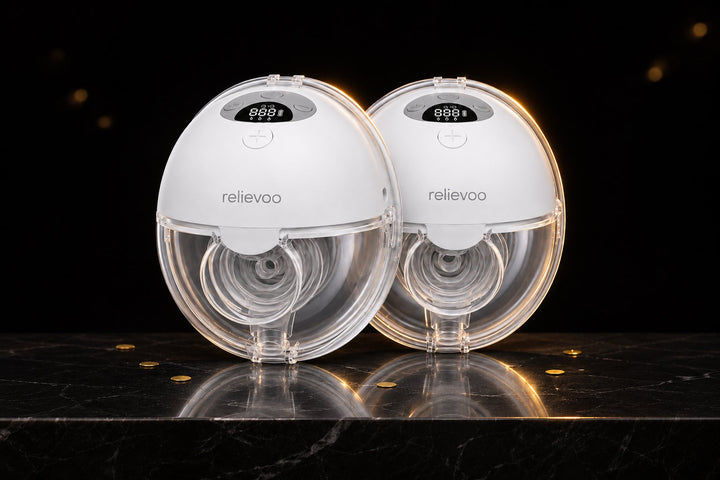
| Type | Wearable, in-bra, hands-free double electric breast pump (sold as a set of two cups) |
| Modes | 4 — Stimulation, Suction, Massage, Automatic |
| Levels | Up to 12 adjustable levels with intelligent suction & frequency adjustment |
| Controls | On-device LED display + touch buttons (mode, +, −, power), no app, no Bluetooth |
| Materials | BPA-free, food-grade PP and soft medical silicone in the milk path |
How a breast pump works
All breast pumps work on the same basic principle: they use suction to draw milk from the breast, mimicking the rhythm of a baby suckling. Most electric pumps have two phases. The first, stimulation mode, uses a light and quick rhythm to encourage your let-down reflex. The second, suction mode, uses a deeper and slower rhythm to express milk more fully.
Some pumps, like the Relievoo M22 PRO2, add extra modes such as a massage setting to help with engorgement and a fully automatic mode that switches between stimulation and suction for you. Understanding these phases helps you know what to expect from your first session and how to adjust the pump to your comfort.
For detailed information on expressing and how pumps work, the Australian Breastfeeding Association has reliable resources for new mums.
Traditional electric pumps with tubing
Traditional electric pumps, including the Medela Symphony, are the classic choice for mums who want maximum suction control. They consist of a motor unit that sits on a table or the floor, with tubes running to the breast shields. This design allows for a powerful motor and precise suction settings, which some mums find essential for effective expression.
What to expect from a traditional pump
Using a traditional pump means you are usually seated and somewhat tethered to the motor unit. This is fine if you are expressing at home while watching television or reading, but it makes moving around difficult. The Symphony in particular is a larger unit, so it is not designed for travel or for expressing on the go.
Traditional pumps are often recommended for mums who are exclusively expressing or who have low milk supply concerns, because the strong suction can be very effective. However, they require you to sit still for the duration of the session, and the tubes can be fiddly to clean and assemble.
Wearable in-bra breast pumps
Wearable pumps are a more recent option that has become popular in Australia. These pumps sit entirely inside your nursing bra, with no tubes and no wires to the wall. Brands like Momcozy, Elvie and Willow make wearable pumps, and Relievoo offers its own range as well.
Hands-free expressing
The main advantage of a wearable pump is freedom. You can walk around, care for older children, prepare dinner or even work at a desk while expressing. The pump is discreet, so you can wear it under a loose top without anyone knowing you are pumping.
The Relievoo M22 PRO2 is a hands-free, in-bra double pump with four modes across twelve gentle levels. It includes a massage mode for engorgement and an automatic mode that flows between stimulation and suction. It has no app and no Bluetooth, so everything is controlled with one-touch buttons on the device itself.
Wearable pumps are generally quieter than traditional pumps, which makes them practical for expressing beside a sleeping baby or during a work call. They are also easier to clean, as there are no tubes to wash and dry.
If you are wondering whether a wearable pump is the right choice for you, our article on whether wearable breast pumps are worth it goes into more detail.
Manual breast pumps
Manual pumps are the simplest and most portable option. They use a hand-operated lever or squeeze handle to create suction, so they require no power source and are very quiet. Brands like Lansinoh and Philips Avent make manual pumps that are small enough to fit in a nappy bag.
When a manual pump makes sense
A manual pump is a good choice for occasional use, such as relieving engorgement or expressing a small amount of milk when you are away from home. It gives you full control over the suction, but your hand can get tired after a longer session. Manual pumps are also the most affordable option, though they are not designed for frequent or exclusive expressing.
For mums who plan to express regularly, a manual pump is usually best kept as a backup rather than a primary pump.
Comparison table: pump types at a glance
To help you compare the options, here is a table that looks at the key differences between the Medela Symphony, other traditional electric pumps, wearable pumps like the Relievoo M22 PRO2, and manual pumps.
| Criterion | Medela Symphony (traditional electric) | Other traditional electric pumps | Relievoo M22 PRO2 (wearable) | Manual pumps |
|---|---|---|---|---|
| Portability | Large unit, not portable | Medium unit, some travel options | Fits entirely in your bra, highly portable | Very small, fits in a nappy bag |
| Hands-free use | No, you are tethered to the motor | No, requires tubing to the motor | Yes, fully hands-free in-bra | No, one hand operates the lever |
| Suction control | Wide range of settings | Multiple levels, varies by brand | 4 modes, up to 12 gentle levels | Full manual control, but tiring |
| Discretion | Not discreet, visible motor unit | Not discreet while in use | Discreet, hidden inside your bra | Quiet, but requires hand movement |
| Cleaning effort | Tubes and shields to wash | Tubes and shields to wash | No tubes, simple cup design | Simple, few parts |
| Best for | Exclusive expressing at home | Regular expressing at home | Mums who need to move around | Occasional use and travel |

Which breast pump should you get?
There is no single best pump for every mum. The right choice depends on how often you plan to express, where you will be doing it, and what feels comfortable for your body. The Australian Breastfeeding Association and Raising Children Network both offer guidance on expressing that can help you decide.
How the flange should fit
One of the most common reasons a pump does not work well is a poor flange fit. The flange is the funnel-shaped piece that sits over your breast, and it needs to be the right size for your nipple. If the flange is too small or too large, suction can be painful or ineffective. Most pumps come with a standard size, but you can often buy different sizes separately.
If pumping hurts, stop and check the flange fit and the suction level. Pumping should not be painful, and discomfort is usually a sign that something needs adjusting.
How long a breast pump session should take
Most mums find that a session takes around 15 to 20 minutes per breast, but this varies from person to person. It is better to express for a comfortable length of time than to push through a longer session that causes discomfort. For current advice on expressing routines and session lengths, it is worth reading the information from the Australian Breastfeeding Association.
Verdict: who each option suits
Here is a clear summary of who each type of pump suits best.
- Choose the Medela Symphony if you are exclusively expressing, need a strong and reliable motor, and are happy to sit at home for each session. It is a sturdy choice for mums who want a traditional, clinical pump.
- Choose a wearable pump like the Relievoo M22 PRO2 if you want to move around while expressing, need to care for older children, or plan to express at work. The hands-free design and quiet motor make it practical for daily life.
- Choose another traditional electric pump if you want strong suction but prefer a smaller unit than the Symphony. Brands like Medela, Philips Avent and Tommee Tippee offer a range of electric pumps with tubing.
- Choose a manual pump if you only need to express occasionally, want something for travel, or need a simple backup option. It is the most portable and affordable choice.
For mums who want the freedom of a wearable pump, the Relievoo breast pump collection has a range of options to consider. The M22 PRO2 is designed for comfort, with a massage mode and gentle suction levels, and it is a practical choice for expressing at home or on the go.
Other things to consider when choosing a pump
Beyond the type of pump, there are a few practical details that can make a big difference to your experience.
Can you pump colostrum?
Yes, you can express colostrum in the days before your baby arrives, but it is worth talking to your midwife or caregiver first. Hand expressing is often recommended for colostrum, as it is gentle and effective in small amounts. Some mums use a pump for this, but it is not always necessary.
Is a breast pump necessary?
No, a breast pump is not necessary for every mum. If you are breastfeeding directly and do not need to be away from your baby, you may not need a pump at all. However, a pump is useful if you are returning to work, want to share night feeds with your partner, or need to relieve engorgement.
For mums returning to work, our guide on returning to work while breastfeeding in Australia has practical tips on how to manage expressing in the workplace.
Final thoughts
Choosing a breast pump is a personal decision, and there is no wrong answer if it works for you and your baby. The Medela Symphony is a reliable traditional option for mums who want a powerful pump at home, while wearable pumps offer freedom and discretion for everyday life. Manual pumps are a simple backup for occasional use.
Take the time to think about where you will be expressing, how often, and what feels comfortable for your body. If you have questions about a specific pump, Relievoo customer service can help you understand the features and find what suits your needs.
Frequently asked questions
How does a breast pump work?
A breast pump uses suction to draw milk from the breast, mimicking the rhythm of a baby suckling. Most electric pumps offer a stimulation phase to encourage let-down, followed by a deeper suction phase for expression. Wearable pumps sit inside your bra, while traditional electric pumps use tubing connected to external motors.
Which breast pump should I get?
It depends on how often you plan to express and where. If you are mostly at home and want strong, customisable suction, a traditional electric pump with tubing may suit you. If you want to move around, work or care for older children while expressing, a hands-free wearable pump is worth considering. A manual pump is a good backup for occasional use.
Why is my breast pump not working?
Common reasons include a loose flange fit, a blocked tube or a low battery. Check that all parts are assembled correctly and that the flange size is right for you. If the pump still does not work, it may be a fault with the device itself, and you can contact Relievoo customer service for help.
How long should a breast pump session take?
Most mums find a session takes around 15 to 20 minutes per breast, but this can vary. The length of a session depends on your milk flow and how comfortable you feel. For current guidance on expressing, it is a good idea to read the advice from the Australian Breastfeeding Association.
Should breast pumping hurt?
No, pumping should not hurt. If you feel pain, the flange may be the wrong size or the suction may be too high for you. Try lowering the suction level and checking the fit of the flange. If discomfort continues, talk to your midwife, child and family health nurse or GP.