Wearable Breast Pump Reviews: How to Choose
Short answer Wearable breast pump reviews help you compare the three main types: wearable in-bra pumps for hands-free convenience, traditional electric pumps with tubing for a more established pumping setup, and manual pumps for occasional use. The right choice depends on your daily routine, how often you pump, and whether you need to move around while expressing milk.
Wearable breast pump reviews are one of the most searched topics for new moms, and it is easy to see why. Choosing the right pump can shape your daily routine, your comfort, and how confidently you navigate the early months with your baby. This guide is for moms who are comparing their options and want a clear, honest look at the main types of pumps available today.

Understanding the Three Main Types of Breast Pumps
Before diving into wearable breast pump reviews, it helps to understand the landscape. There are three broad categories: wearable in-bra pumps, traditional electric pumps with tubing, and manual pumps. Each serves a different purpose, and many moms end up using more than one type depending on the situation.
Wearable In-Bra Pumps
Wearable pumps fit discreetly inside your nursing bra. They are cordless, tubeless, and hands-free, which means you can move around, work, or care for your baby while pumping. Brands like Momcozy, Elvie, and Willow all make wearable pumps, and each has its own approach to design and features.
Traditional Electric Pumps with Tubing
Traditional electric pumps have been the standard for decades. They consist of a motor unit that sits on a table, connected to flange cups by tubing. Brands like Medela and Lansinoh are well known for this type of pump. They are reliable and widely used, but they tether you to a power source and a flat surface.
Manual Pumps
Manual pumps are simple, handheld devices that work with your own hand strength rather than a motor. They are lightweight, quiet, and portable. Brands like Philips Avent and Tommee Tippee make manual pumps. They are a good option for occasional use or as a backup, but they can be tiring for frequent pumping sessions.
| Feature | Details |
|---|---|
| Type | Wearable, in-bra, hands-free double electric breast pump (sold as a set of two cups) |
| Modes | 4 — Stimulation, Suction, Massage, Automatic |
| Levels | Up to 12 adjustable levels with intelligent suction & frequency adjustment |
| Controls | On-device LED display + touch buttons (mode, +, −, power), no app, no Bluetooth |
| Materials | BPA-free, food-grade PP and soft medical silicone in the milk path |
| Noise | Ultra-quiet motor, tuned for calm night sessions |
What to Look for in a Wearable Breast Pump
When reading wearable breast pump reviews, keep your own priorities in mind. Comfort, noise level, and ease of use tend to matter most to moms who pump regularly. A pump that is uncomfortable or loud will be hard to stick with, no matter how convenient it is.
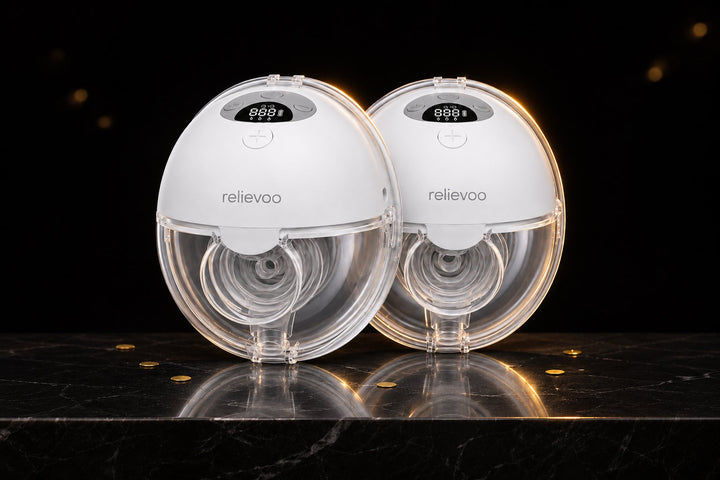
One option to consider is the Relievoo Serenity wearable breast pump. It is a hands-free, in-bra double pump with four modes and up to twelve soft levels. It includes a dedicated massage mode for engorgement and tenderness, and the motor is designed to be ultra-quiet for night sessions. The milk path uses BPA-free, food-grade PP and soft medical silicone.
Comfort and Fit
Comfort starts with the flange. A proper fit is essential for effective pumping and for avoiding soreness. Many moms find that sizing varies between brands, so it is worth checking the fit carefully. For more detail, the breast pump flange guide on the Relievoo blog offers practical advice.
Noise Level
If you plan to pump at work, on a call, or beside your baby at night, noise matters. Wearable pumps vary in how quiet they are. Some are designed specifically to be discreet, so you can pump without drawing attention.
Controls and Display
Some pumps connect to a smartphone app, while others have controls built into the device. The Relievoo Serenity uses on-device touch buttons and a small LED display on each cup that shows your mode, level, and battery. There is no app to download and no phone to pair, which keeps things simple.
Wearable vs. Traditional vs. Manual: A Side-by-Side Comparison
To make the decision easier, here is a comparison table that lays out the key differences between the three types. The Relievoo column reflects the Serenity pump specifically, while the other columns describe the general characteristics of each type.
| Criterion | Wearable In-Bra (Relievoo Serenity) | Traditional Electric with Tubing | Manual Pump |
|---|---|---|---|
| Hands-free | Yes, worn inside the bra | No, requires a table and tubing | No, requires one hand to operate |
| Portability | High, fits in a bra or small bag | Low, needs a flat surface and power outlet | High, very lightweight and compact |
| Modes and levels | 4 modes, up to 12 levels | Typically multiple modes and levels | No modes, suction controlled by hand |
| Noise | Ultra-quiet motor | Can be audible, varies by model | Very quiet |
| Ease of cleaning | Few parts, no tubes | More parts, including tubes | Few parts, simple design |
| Best for | Busy moms who multitask | Primary pumping at home | Occasional or emergency use |
Do Wearable Breast Pumps Really Work?
This is one of the most common questions in wearable breast pump reviews. The short answer is yes, they can work very well for many moms. The key is proper positioning and flange fit. When the pump sits correctly inside the bra and the flange is the right size, a wearable pump can express milk effectively.
For a deeper look at how these pumps perform in daily life, the article Do Wearable Breast Pumps Work? on the Relievoo blog explores this topic in detail.
Can You Pump Before the Baby Is Born?
Some moms wonder if they can start pumping before delivery. In general, pumping before birth is not recommended unless a healthcare provider advises it for a specific reason. Colostrum harvesting is a different practice that should only be done under professional guidance. Talk to your OB-GYN or midwife if you have questions about this.
Is Pumping Supposed to Hurt?
Pumping should not hurt. If you feel pain, the suction may be too high or the flange may not fit properly. Start at a low level and gradually increase until you feel a gentle pulling sensation, not pain. If discomfort continues, a lactation consultant can help you find the right fit and technique.

How to Choose the Right Pump for Your Lifestyle
There is no single best pump for everyone. The right choice depends on how often you pump, where you pump, and what your days look like. A mom who returns to work may need a different pump than a mom who stays home and nurses most of the time.
For a more detailed breakdown of the trade-offs, the article Wearable Breast Pump vs Regular: How to Choose walks through the decision process step by step.
How Long Should a Pumping Session Last?
Pumping sessions vary from mom to mom. A typical session lasts until the breasts feel comfortably drained, which is often around the same length as a baby's feed. For general guidance on pumping routines, the CDC and the Office on Women's Health offer reliable information.
Why Might a Pump Stop Working?
If a pump suddenly stops working well, check a few common causes. The flange might not be seated properly, the bra might be too loose or too tight, or the suction might be set too low. For wearable pumps, make sure the cups are positioned correctly and the seal is good. If problems persist, reach out to the manufacturer's customer service for help.
Verdict: Who Each Pump Type Suits Best
After reading wearable breast pump reviews and comparing the options, here is a clear summary of who each type suits.
- Choose a wearable in-bra pump if you need to pump while moving around, working, or caring for your baby. It is ideal for moms who value discretion and hands-free convenience. The Relievoo Serenity is a good example of this category, with its quiet motor and massage mode.
- Choose a traditional electric pump if you do most of your pumping at home and prefer a setup with a separate motor unit. It is a familiar, widely used option that many moms start with.
- Choose a manual pump if you pump only occasionally, need a lightweight backup, or want something simple for short trips. It is also useful for relieving engorgement when you are away from your main pump.
Many moms find that a combination works best. A traditional or wearable pump for daily use, plus a manual pump for emergencies, covers most situations. The right mix depends on your routine and what feels comfortable for you.
Making Your Decision
Choosing a breast pump is a personal decision. There is no wrong answer, only the option that fits your life best. Take time to consider how you plan to pump, where you will be, and what features matter most to you. If you are still unsure, browsing the full Relievoo breast pump collection can help you see what is available.
Remember that the American College of Obstetricians and Gynecologists and HealthyChildren.org offer general guidance on breastfeeding and pumping. For personalized advice, a lactation consultant or your healthcare provider can answer questions about your specific situation.
Whatever you choose, the goal is the same: a pumping routine that feels manageable and comfortable for you and your baby. Take your time, compare your options, and trust that the right pump is out there.
Frequently asked questions
Which wearable breast pump is best?
The best wearable pump depends on your priorities. If comfort and quiet operation matter most, look for a pump with a massage mode, soft silicone in the milk path, and a low-noise motor. Consider how often you plan to pump and whether you want on-device controls or an app.
Do wearable breast pumps work?
Yes, wearable in-bra pumps can express milk effectively for many moms. They work best when the flange fits well and the pump is positioned correctly inside the bra. They offer the convenience of hands-free pumping without tubes or cords, which suits busy routines.
Is a wearable breast pump worth it?
For moms who pump frequently, travel, or need to multitask, a wearable pump can be worth the investment. The hands-free design lets you pump while working, caring for a baby, or moving around. If you only pump occasionally, a manual pump might be enough.
How long should a breast pump session last?
Pumping sessions vary from mom to mom. A typical session lasts until the breasts feel comfortably drained, which is often around the same length as a baby's feed. Follow the current guidance from trusted health organizations like the CDC or the Office on Women's Health for pumping routines.
Should breast pumping hurt?
Pumping should not hurt. If you feel pain, the flange may be the wrong size or the suction may be too high. Check the fit and lower the suction level. If discomfort continues, talk to a lactation consultant or your healthcare provider for personalized help.