Breast Pumps Australia Reviews: A Practical Buying Guide
Short answer The best breast pump for you depends on how often you plan to express, where you will pump and what feels comfortable on your body. Look for a pump with adjustable suction, a quiet motor and parts that are easy to clean, and check how it fits inside your bra before you buy.
If you have been searching for breast pumps Australia reviews, you are probably trying to work out which pump will actually suit your daily life. This guide is for mums who want a calm, honest overview of what to look for, without the marketing noise. We will walk through the features that matter most, help you compare your options and give you a simple checklist to use before you buy.

What to look for in a breast pump in Australia
Every mum's routine is different, so the "best" pump is the one that fits how you actually live. Some mums pump a few times a week at home, while others need to express at work, in the car or overnight. Before you compare brands, it helps to think about the basics: comfort, how the pump is worn, noise, cleaning, fit, portability and the support you get if something goes wrong.
For a general overview of expressing and how pumps work, the Australian Breastfeeding Association has practical, evidence-based information that is well worth reading.
Comfort comes first
If a pump is not comfortable, you simply will not use it. Comfort is about more than soft silicone. It is about suction strength, the rhythm of the pump and how the flange sits against your breast. Look for a pump with adjustable suction levels so you can find a gentle setting that feels right, rather than a one-size-fits-all approach.
Some pumps also include a massage mode, which can be a lovely relief if you are dealing with engorgement or tender breasts. A pump that feels kind to your body makes it much easier to keep up a regular expressing routine.
How the pump is worn matters
Traditional electric pumps have tubes, bottles and a motor that sits on a table beside you. Wearable pumps, on the other hand, sit discreetly inside your nursing bra, with no tubes and no wires to the wall. If you want to move around, get things done or pump while caring for your baby, a hands-free wearable pump can be a game changer.
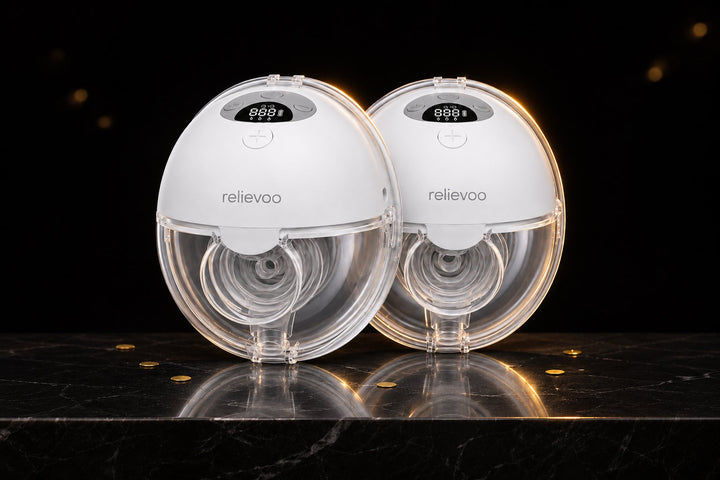
One option to consider is the Relievoo M22 PRO2, a wearable double pump that sits in your bra and is controlled with one touch. It has four modes and up to twelve gentle levels, so you can shape each session to how you are feeling that day.
Noise levels and discretion
If you plan to pump at work, on a video call or beside your sleeping baby, noise matters more than you might think. A loud motor can be embarrassing in an open-plan office and can easily wake a light-sleeping baby. Look for a pump described as quiet or low-noise, and read how other mums describe it in real settings.
Wearable pumps are generally quieter than traditional ones because the motor is small and sits close to your body. If discretion is a priority for you, this is one of the biggest reasons to consider a hands-free option.
Cleaning and hygiene
Every part of a pump that touches your milk needs to be cleaned after each use. That means you want a pump with as few fiddly parts as possible. Cups, valves and flanges that come apart easily and are made from food-grade, BPA-free materials are much easier to live with.
For current advice on cleaning, sterilising and storing expressed milk, the Raising Children Network has clear, practical guidance that is a good place to start.
Fit and flange size
A pump only works well if it fits your body. The flange, the part that sits over your breast, needs to be the right size for your nipple. If it is too small or too large, you may feel discomfort or get less milk. Some pumps come with multiple flange sizes, while others are designed to fit most bodies comfortably.
If you are unsure about sizing, it is worth measuring yourself or asking your child and family health nurse for guidance. A good fit makes pumping more effective and far more comfortable.
Portability and battery life
Think about where you will actually pump. If you are mostly at home, a mains-powered pump is fine. If you are returning to work, travelling or pumping on the go, a pump with a rechargeable battery and a compact design is far more practical. Wearable pumps are the most portable option because they fit in your bra and often in a small bag.
For mums heading back to work, our guide on returning to work while breastfeeding in Australia covers the practical side of building pumping into your workday.
Support and warranty
Pumps are an investment, so it is worth checking what support you get after purchase. A lifetime warranty gives you peace of mind that the brand stands behind its product. It is also helpful to know whether the company has a customer service team you can actually talk to if you have questions about using the pump.
| Feature | Details |
|---|---|
| Type | Wearable, in-bra, hands-free double electric breast pump (sold as a set of two cups) |
| Modes | 4 — Stimulation, Suction, Massage, Automatic |
| Levels | Up to 12 adjustable levels with intelligent suction and frequency adjustment |
| Controls | On-device LED display and touch buttons, no app, no Bluetooth |
| Materials | BPA-free, food-grade PP and soft medical silicone in the milk path |
| Charging | USB-rechargeable with a simple round charging base |
How to compare breast pumps honestly
When you read reviews online, remember that every mum's body and routine is different. A pump that one mum loves might not suit you at all. Instead of relying on a single review, compare pumps against the criteria that matter to you. The table below summarises the key things to check.
| Criterion | Why it matters | What to check |
|---|---|---|
| Comfort | You will only pump regularly if it feels good | Adjustable suction levels, soft silicone, massage mode |
| Wear style | Determines whether you can move around while pumping | Hands-free in-bra design vs tubes and a tabletop motor |
| Noise | Affects discretion at work and around a sleeping baby | Look for "quiet" or "low-noise" in the product description |
| Cleaning | Fewer parts means easier, faster cleaning | Check that cups and valves come apart easily |
| Fit | A good fit prevents discomfort and improves expression | Flange sizes, in-bra fit, whether it stays in place |
| Portability | Matters if you pump at work, travelling or on the go | Rechargeable battery, compact size, no cords |
| Support | Gives you confidence if something goes wrong | Warranty length and access to customer service |
Wearable vs traditional breast pumps
One of the biggest decisions you will make is whether to choose a wearable pump or a traditional electric pump. Both have their place, and the right choice depends on your lifestyle.
Traditional pumps are often what mums use in the early weeks, when they are establishing their milk supply and spending most of their time at home. They tend to have strong suction and are reliable, but they tether you to a wall and make it hard to do anything else while pumping.
Wearable pumps, like the Relievoo M22 PRO2, are designed for mums who want freedom. They sit inside your bra, so you can walk around, care for your baby or even lie back on the sofa while expressing. There are no tubes, no dangling bottles and no app to fiddle with. The controls are on the device itself, with a small LED display showing your mode, level and battery.
If you are still deciding whether a wearable pump is worth it, our article on whether wearable breast pumps are worth it goes into more detail.
Can you pump while pregnant?
Some mums wonder whether it is safe to pump while pregnant. Generally, expressing during pregnancy is not recommended unless a health professional has advised it, because nipple stimulation can sometimes trigger contractions. If you are pregnant and thinking about pumping, it is best to talk to your midwife or GP first.
What if my pump is not working well?
If your pump suddenly seems less effective, there are a few simple things to check. Make sure the cups are positioned correctly and that the silicone parts are not worn or damaged. Check that the suction is set at a level that works for you, and that the pump is fully charged. If you are still having trouble, it is worth reaching out to the brand's customer service team for advice.
Your honest checklist before buying
Use this checklist when you compare pumps. It will help you focus on what actually matters rather than getting distracted by marketing claims.
- Does the pump have adjustable suction levels so I can find a comfortable setting?
- Is it comfortable to wear, and does the flange fit my body well?
- Can I pump hands-free, or will I be tethered to a wall?
- Is the motor quiet enough for work or for pumping beside my sleeping baby?
- Are the parts easy to take apart and clean after every use?
- Is it portable enough for my routine, with a rechargeable battery if I need one?
- Does the brand offer a warranty and a customer service team I can contact?
- Is the pump made from food-grade, BPA-free materials?

Who each type of pump suits
If you are mostly at home and do not mind sitting still for twenty minutes, a traditional electric pump can work well and is often more affordable. If you are returning to work, travelling or simply want to move around while expressing, a wearable pump is worth the investment. And if you are dealing with engorgement or tender breasts, a pump with a massage mode can make a real difference to your comfort.
For a full range of options, you can browse the Relievoo breast pump collection to compare what is available.
A calm final word
Choosing a breast pump is a personal decision, and there is no single right answer. Take your time, compare the features that matter to you and trust what feels comfortable on your body. If you have questions about a specific pump, Relievoo's customer service team is there to help. And remember, the Australian Breastfeeding Association and your child and family health nurse are wonderful resources if you ever need support with expressing.
Frequently asked questions
What is the best breast pump to buy?
There is no single best pump for everyone. The right choice depends on how often you plan to express, whether you want to be hands-free and what feels comfortable on your body. Compare suction levels, noise, fit and how easy the parts are to clean before you decide.
Is there any side effect of using a breast pump?
Most mums pump without any problems, but some feel mild nipple tenderness or sensitivity, especially when they are new to expressing. Using a pump with gentle, adjustable suction and a comfortable flange fit can help. If you feel pain or notice any unusual changes, it is worth chatting with your midwife, child and family health nurse or GP.
How long do breast pumps last?
A well-looked-after electric pump can last for years, but the motor and silicone parts do wear over time. Regular cleaning and replacing soft parts when they show signs of wear will help. Relievoo pumps come with a lifetime warranty, so if you have questions about your pump, their customer service team can help.
How does a breast pump work?
A breast pump uses gentle suction to draw milk from the breast, mimicking the rhythm of a baby suckling. Most pumps start with a quick, light stimulation phase to encourage let-down, then switch to a slower, deeper suction for expressing. Wearable pumps sit inside your bra, so you can pump hands-free without tubes or wires.
Can you breast pump colostrum?
Yes, many mums express colostrum in the early days, especially if their baby needs extra feeds. It is usually easiest to hand express colostrum into a small container, though some mums do use a pump. If you are unsure what is right for your situation, the Australian Breastfeeding Association has practical resources to help.