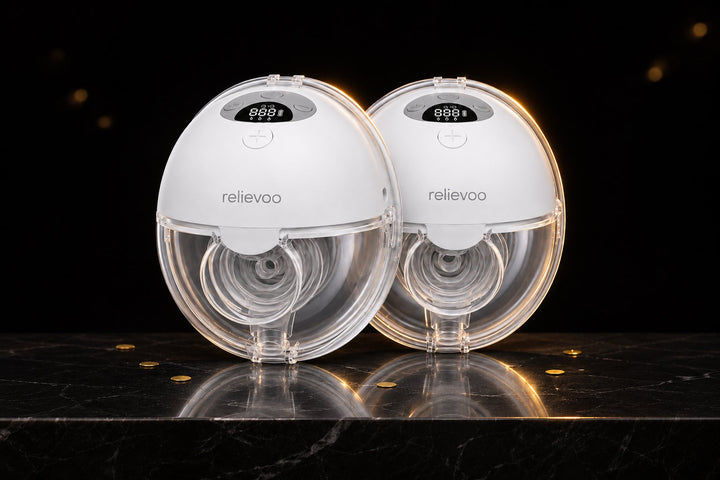
Do Wearable Breast Pumps Work?
Short answer Yes, wearable breast pumps do work for many mums, but they work differently from mains-powered pumps. They are hands-free, in-bra pumps designed for convenience and discreet expressing. They suit mums who need to pump on the go, at work, or while caring for older children. The key is choosing a pump with good suction levels, a comfortable fit, and a quiet motor.
If you have been searching for an honest answer to the question "do wearable breast pumps work", you are in the right place. This article is for mums in Ireland who are curious about hands-free pumping, whether for returning to work, managing night feeds, or simply wanting more freedom during the day. We will look at how these pumps work, what they are good at, and where they might not be the best fit, so you can decide with confidence.

What is a wearable breast pump?
A wearable breast pump is a hands-free, in-bra electric pump that fits entirely inside your nursing bra. Unlike traditional pumps, there are no tubes connecting you to a machine on the table, and no wires to the wall. The motor, collection cup and battery all sit in a discreet unit that rests against your chest, so you can move around, walk, and even get on with light chores while expressing.
Most wearable pumps work in a similar way. They use gentle suction to draw milk from your breast into a collection cup, with different modes to mimic a baby's natural feeding rhythm. Many have a stimulation mode to encourage let-down, a suction mode for deeper expression, and sometimes a massage mode for comfort. The controls are usually on the device itself, so there is no app to download and no phone to pair.
How does a wearable breast pump work?
The pump sits over your nipple, with a soft flange that creates a seal against your breast. When you switch it on, the motor creates a gentle vacuum that draws milk into the cup. Most pumps start with a light, quick rhythm to stimulate let-down, then switch to a slower, deeper rhythm once your milk is flowing. Some models, like the Relievoo M22 PRO2, also offer an automatic mode that moves between stimulation and suction for you.
Because everything is contained in the cup, you can express while sitting upright, which is different from traditional pumps where you often need to lean forward. This makes wearable pumps popular for mums who want to pump while working at a desk, reading to a toddler, or even resting on the sofa.
| Feature | Details |
|---|---|
| Type | Wearable, in-bra, hands-free double electric breast pump (sold as a set of two cups) |
| Modes | 4 — Stimulation, Suction, Massage, Automatic |
| Levels | Up to 12 adjustable levels with intelligent suction & frequency adjustment |
| Controls | On-device LED display + touch buttons (mode, +, −, power), no app, no Bluetooth |
| Materials | BPA-free, food-grade PP and soft medical silicone in the milk path |
Do wearable breast pumps work as well as traditional pumps?
This is the question most mums want answered, and the honest answer is: it depends. Wearable pumps work very well for many mums, but they are not identical to mains-powered pumps. Traditional pumps, especially the larger hospital-style ones, often have stronger suction and more consistent vacuum patterns. That does not mean wearable pumps are ineffective; it simply means they suit different situations.
For mums who have an established milk supply and are expressing for comfort, for a bottle here and there, or for pumping at work, a wearable pump can be just as practical. The convenience of being hands-free often means mums pump more often, which can support their overall expressing routine. For mums who are exclusively pumping or who have very low supply, a mains-powered pump might be a better primary option, with a wearable pump as a backup.
It is also worth noting that every mum responds differently to different pumps. What works brilliantly for one person might not work for another. The best approach is to consider your own needs, read about the features that matter, and perhaps try a pump to see how your body responds. If you are unsure, talking to your public health nurse, midwife or GP is always a good idea.
What to look for in a wearable breast pump
If you are thinking about buying a wearable pump, there are a few key things to consider. Comfort, fit, noise and cleaning all play a big part in how often you will actually use the pump, and how much you will enjoy the experience.
Comfort and fit
The flange, which is the part that sits against your breast, needs to fit properly. A flange that is too small can be painful, while one that is too large may not create a good seal. Many pumps come with different flange sizes, and it is worth checking the sizing guide before you buy. The pump should sit securely in your bra without digging in or feeling heavy.
Noise levels
If you plan to pump at work, on a video call, or beside your baby's cot at night, noise matters. Some wearable pumps are very quiet, while others are noticeably louder. Look for pumps that describe themselves as low-noise or ultra-quiet, and read reviews from other mums to get a sense of how they sound in real life.
Cleaning and maintenance
Any breast pump needs to be cleaned after every use, and wearable pumps are no different. Because they have more parts than a simple manual pump, it helps to choose one that is easy to take apart and put back together. Check that the collection cups are clear so you can see your milk flow, and that the parts are made from food-safe, BPA-free materials. For sterilising advice, the HSE breastfeeding pages have clear guidance on cleaning and storage.
Battery life and charging
Wearable pumps are rechargeable, so battery life is worth checking. If you are pumping at work all day, you will want a pump that lasts through several sessions. Most pumps come with a USB charging base, which makes topping up simple. It is also worth checking how long a full charge lasts, and whether the pump shows the battery level on a display.
Portability
The whole point of a wearable pump is that you can take it anywhere. The cups should be small enough to fit discreetly in your bra, and the whole set should be easy to carry in a changing bag or work bag. Some mums also buy a protective case to keep the pump and accessories safe when travelling.
An honest checklist for choosing a wearable pump
Before you make a decision, run through this simple checklist. It will help you compare options and focus on what matters most for your situation.
- Does the pump fit comfortably inside your nursing bra without bulging or feeling heavy?
- Are the flange sizes suitable for you, and can you swap them if needed?
- Does the pump offer different modes, such as stimulation, suction and massage?
- Is the motor quiet enough for your intended use, whether at work or beside the cot at night?
- Are the parts easy to take apart, clean and reassemble?
- Are the materials food-safe and BPA-free?
- How long does the battery last, and how easy is it to charge?
- Does the pump have a clear display showing mode, level and battery?
- Is there a warranty and a returns policy in case it does not suit you?

Comparing wearable pumps: what matters most
To help you weigh up your options, here is a simple table of the main criteria to consider. Use it as a guide when you are comparing different models.
| Criterion | Why it matters | What to check |
|---|---|---|
| Comfort and fit | A comfortable pump is one you will actually use. Poor fit can cause pain and reduce output. | Flange sizes available, weight of the cup, how it sits in your bra. |
| Modes and levels | Different modes help with let-down, expression and comfort. More levels mean more control. | Number of modes, number of levels, whether there is an automatic mode. |
| Noise | A quiet pump lets you express discreetly at work, at night or in company. | Descriptions like low-noise or ultra-quiet, and reviews from other mums. |
| Cleaning | Easy cleaning keeps your pump hygienic and encourages regular use. | Number of parts, whether they are dishwasher safe, clear cups for visibility. |
| Battery and charging | Good battery life means you can pump away from home without worry. | Battery duration, charging method, whether the display shows battery level. |
| Portability | The pump should be easy to carry and discreet to wear. | Size of the cups, weight, whether a travel case is available. |
| Support and warranty | A good warranty and returns policy give you peace of mind. | Length of warranty, returns policy, customer service availability. |
Who do wearable breast pumps suit best?
Wearable pumps are a great fit for mums who need flexibility. If you are returning to work and want to express during the day without being tied to a desk, a wearable pump makes that much easier. If you have a toddler who needs attention while you pump, the hands-free design is a lifesaver. And if you are expressing at night, a quiet wearable pump lets you do so without disturbing your baby.
They also suit mums who pump occasionally, such as for a date night out or to build a small freezer stash. For these situations, the convenience of a wearable pump often outweighs any difference in suction strength. If you are exclusively pumping or have a very low supply, you might find a mains-powered pump more effective as your main pump, with a wearable one as a backup for when you are out and about.
If you are curious about how the Relievoo M22 PRO2 compares to other options, it is worth looking at the full range of breast pumps available from Relievoo. The M22 PRO2 is a hands-free, in-bra double pump with four modes, twelve gentle levels, and an ultra-quiet motor, all tucked discreetly inside your bra. It has a dedicated massage mode for engorgement and tenderness, and everything is controlled on the device itself, with no app to download.
For mums who are returning to work, our guide on returning to work and breastfeeding in Ireland has practical tips on managing your routine. And if you are wondering whether wearable pumps are worth the investment, our article on whether wearable breast pumps are worth it goes into more detail.
Final thoughts
So, do wearable breast pumps work? For most mums, yes, they work very well indeed, as long as you choose the right one for your needs. They offer freedom, discretion and comfort that traditional pumps simply cannot match. The key is to think about your own situation, consider the factors we have outlined, and choose a pump that fits your body and your lifestyle. If you have any questions about a specific product, Relievoo customer service is there to help.
Frequently asked questions
How does a wearable breast pump work?
A wearable breast pump sits inside your nursing bra, with a collection cup over your breast and a small motor on top. It uses gentle suction to draw milk into the cup, just like a standard electric pump, but without tubes or wires. Most have different modes, such as stimulation and suction, to mimic a baby's natural feeding rhythm.
Do wearable breast pumps work as well as regular pumps?
Wearable pumps can be very effective for many mums, but they are not identical to mains-powered hospital-style pumps. They are designed for convenience and comfort, and many mums find they express plenty of milk with them. The best approach is to try one and see how your body responds, and to check that the flange fits well.
Why is my wearable breast pump not working?
The most common reasons are a poor flange fit, a low battery, or parts not assembled correctly. Check that the silicone membrane is seated properly and that the cup is sealed against your breast. If you are still having trouble, it is worth reviewing the cleaning instructions, as leftover milk residue can affect suction.
How do you clean a wearable breast pump at work?
You can rinse the collection cups with cold water after expressing, then wash them properly with warm soapy water when you get home. Many mums keep a bottle brush and a clean container at their desk for this purpose. Follow the current sterilising advice from the HSE for the best hygiene routine.
Are wearable breast pumps worth it?
For many mums, yes, because the hands-free design means you can express while doing other things. They are especially useful for pumping at work, during night feeds, or while caring for older children. The main trade-off is that they are usually more expensive than basic manual pumps, so it helps to weigh up how often you will use one.