Portable Bottle Warmer for Travel: A Buying Guide
Short answer A portable bottle warmer for travel is a compact device designed to heat a bottle of breast milk or formula while you are away from home. When choosing one, consider how fast it heats, how it is powered, and how easy it is to clean. Always follow current storage and heating advice from Health Canada and La Leche League Canada.
If you are planning to travel with a baby, feeding time is one of the first things you will think about. A portable bottle warmer for travel can make a big difference in how smoothly your day goes, whether you are visiting family, running errands, or taking a longer trip. This guide is for parents who want to understand what to look for in a portable bottle warmer, how these devices work, and what matters most when you are away from your kitchen.

What is a portable bottle warmer for travel?
A portable bottle warmer is a small, battery-powered or USB-powered device designed to heat a bottle of breast milk or formula while you are on the go. Unlike a countertop warmer, it is built to be carried in a diaper bag, so you can warm a bottle in a car, a park, or a hotel room. The main advantage is convenience: you do not need to search for a microwave or a kettle, and you can offer your baby a warm bottle wherever you are.
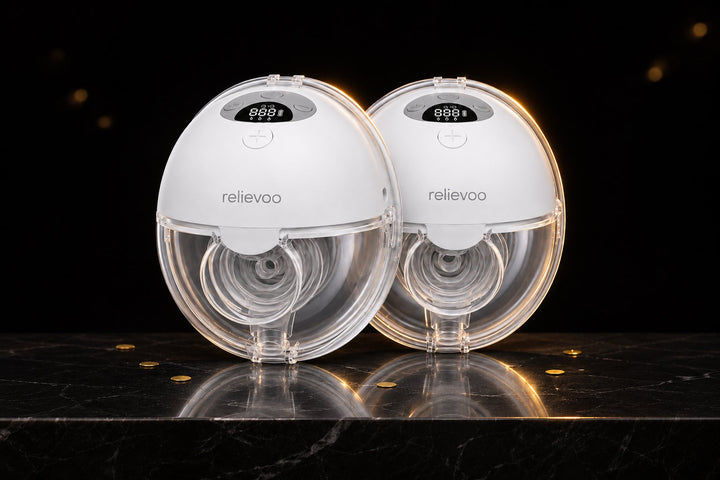
For parents who are pumping and bottle feeding, a portable warmer can be a useful addition to your travel kit. It pairs well with a wearable breast pump like the Relievoo M22 PRO2, which lets you express milk hands-free, and then warm it for your baby when you are ready to feed. If you are still deciding on a pump, our breast pump collection has options to suit different needs.
| Feature | Details |
|---|---|
| Design | Protective hard shell design |
| Weight | Lightweight and easy to carry |
| Interior | Custom-molded interior for secure fit |
| Storage | Zippered mesh pocket for accessories |
| Materials | EVA shell, polyester lining, nylon strap |
| Care | Wipe clean with a damp cloth; air dry only |
How does a bottle warmer work?
Most portable bottle warmers use a heating element that wraps around the bottle or a small water bath that heats the milk gently. The device warms the milk to a comfortable drinking temperature, usually around body temperature, and then maintains that warmth for a short period. Some models have a simple on-off switch, while others offer adjustable temperature settings.
The key is gentle, even heating. Breast milk contains natural antibodies and nutrients that can be damaged by high heat, so a warmer that heats slowly and steadily is a better choice than one that gets very hot very fast. For formula, the same principle applies: you want a consistent temperature without hot spots.
If you are warming breast milk, it is worth reading the current guidance from Health Canada and La Leche League Canada on safe handling and storage. These organisations provide reliable information on how to store, warm, and use breast milk safely.
What bottle warmer is best for breast milk?
For breast milk, the best warmer is one that heats gently and evenly. Look for a model with a low-temperature setting or a slow warming cycle. Avoid warmers that boil or overheat the milk, as this can destroy some of the beneficial properties. A portable warmer with adjustable temperature is a practical choice, since you can control the heat and stop the cycle when the milk reaches the right temperature.
Can you bottle warm formula?
Yes, you can warm formula in a portable bottle warmer. Many babies are happy with room-temperature formula, but if your baby prefers a warm bottle, a portable warmer works well. Just be sure to follow the mixing instructions on the formula package and warm the prepared bottle gently. Never use a microwave to heat formula, as it can create hot spots that could burn your baby's mouth.
What to look for in a portable bottle warmer
When you are comparing portable bottle warmers, a few key features matter more than others. Here is what to consider before you buy.
Heating speed
One of the most common questions is how long a bottle warmer takes. The answer depends on the model and the amount of milk in the bottle. Some portable warmers heat a bottle in a few minutes, while others take longer. If you are out and about with a hungry baby, a faster warmer may be worth the extra cost. Look for a model that clearly states its warming time in the product details.
Power source
Portable warmers are powered in different ways. Some use a rechargeable battery, others use USB, and a few use disposable batteries or a car adapter. Think about where you will use the warmer most. A rechargeable model is convenient for long outings, while a USB model can be charged from a power bank or a laptop. If you are travelling by car, a model that plugs into a car charger might be the most practical.
Size and weight
A portable bottle warmer should be easy to carry. Look for a compact model that fits in a diaper bag without taking up too much space. Weight matters too, especially if you are carrying a full bag already. A lightweight warmer is easier to bring along on day trips and longer journeys.
Ease of cleaning
Milk residue can build up quickly, so a warmer that is easy to clean is important. Some models have removable parts that can be washed by hand or in the dishwasher. Others need to be wiped clean only. Check the care instructions before you buy, and think about how much effort you are willing to put into cleaning after each use.
Compatibility with bottles
Not all warmers fit all bottles. Some are designed to fit standard-size bottles, while others have an adjustable opening that can hold different shapes and sizes. If you use a specific brand of bottle, check whether the warmer is compatible. A universal model is a safer choice if you are not sure.
Safety features
Look for a warmer with an automatic shut-off or a timer, so it does not overheat the milk. Some models have a temperature indicator that lets you know when the milk is ready. These features add a layer of safety and help you avoid serving milk that is too hot.
Checklist for choosing a portable bottle warmer
- Does the warmer heat gently and evenly, without overheating the milk?
- How long does it take to warm a standard bottle of milk?
- What is the power source, and will it work where you plan to use it?
- Is the warmer compact and lightweight enough for your diaper bag?
- Are the parts easy to clean, and can they be washed by hand or in the dishwasher?
- Does it fit the bottles you already use, or is it adjustable?
- Does it have an automatic shut-off or a temperature indicator?
- Is it durable enough for regular travel and everyday use?
Comparison table: key criteria for a portable bottle warmer
| Criterion | Why it matters | What to check |
|---|---|---|
| Heating speed | A hungry baby does not like to wait, and a slow warmer can be frustrating on the go. | Look for a stated warming time in the product details. |
| Power source | Different situations call for different power options, from rechargeable batteries to USB or car adapters. | Think about where you will use the warmer most and choose accordingly. |
| Size and weight | A bulky warmer defeats the purpose of a portable model and takes up precious bag space. | Check the dimensions and weight to ensure it fits your diaper bag. |
| Ease of cleaning | Milk residue can build up and affect the warmer's performance over time. | Look for removable, washable parts or a model that wipes clean easily. |
| Bottle compatibility | Not all warmers fit all bottles, and a poor fit can lead to uneven heating. | Check whether the warmer fits your bottle brand or has an adjustable opening. |
| Safety features | Overheated milk can burn a baby's mouth and damage nutrients in breast milk. | Look for an automatic shut-off, a timer, or a temperature indicator. |
| Portability | You will be carrying this warmer with you, so it should be easy to pack and handle. | Consider a lightweight model with a strap or a compact shape. |

Keeping your pump and accessories organised on the go
While a portable bottle warmer handles the heating, you will also need a safe place to keep your pump and accessories when you are travelling. The Relievoo Protective Carrying Case is designed for this purpose. It has a protective hard shell, a custom-molded interior that holds your pump securely, and a zippered mesh pocket for small accessories. It is lightweight, easy to carry, and made from an EVA shell with a polyester lining and a nylon strap. It is a practical companion for pumping mums who want their equipment organised and protected while away from home.
If you are new to pumping on the go, our guide on how to clean a breast pump on the go offers practical steps for keeping your equipment safe and ready to use. And for general advice on pumping while travelling, the Public Health Agency of Canada has useful information on breastfeeding and infant nutrition.
Who a portable bottle warmer suits
A portable bottle warmer is a good fit for parents who bottle feed regularly and want to keep a consistent routine when they are away from home. It suits families who travel often, parents who are returning to work and need to warm milk at the office, and caregivers who look after a baby during the day. It is also helpful for parents who pump and want to offer expressed milk at a comfortable temperature without relying on a kitchen.
If you mostly feed your baby directly at the breast and rarely use bottles, a portable warmer may be less necessary. And if you are happy offering room-temperature milk or formula, you might not need one at all. But for parents who want the convenience of a warm bottle wherever they are, a portable warmer is a simple, practical tool.
Final thoughts
Choosing a portable bottle warmer for travel comes down to how you plan to use it. Think about heating speed, power source, size, and how easy it is to clean. A model that heats gently and has a few safety features will serve you well for most situations. Pair it with a good carrying case for your pump and accessories, and you will be ready for feeding time wherever the day takes you.
For more guidance on pumping and bottle feeding, explore our articles on bottle warmers for breast milk and storing breast milk safely. And if you have questions about a specific product, Relievoo customer service is happy to help.
Frequently asked questions
How does a bottle warmer work?
A portable bottle warmer uses a heating element to gently warm milk or formula to a comfortable drinking temperature. Most models heat the bottle directly, while some use a warm water bath. The goal is to warm the milk evenly without overheating it, which can destroy nutrients.
What bottle warmer is best for breast milk?
For breast milk, look for a warmer that heats gently and evenly, since high heat can damage the natural properties of the milk. A model with adjustable temperature settings or a slow, steady warming cycle is a good choice. Always follow the current advice from Health Canada and La Leche League Canada on safe handling.
Why are bottle warmers necessary?
Bottle warmers are not strictly necessary, but they make feeding more convenient, especially when you are away from home. They heat milk to a comfortable temperature quickly and evenly, which can help a baby who prefers a warm bottle. A portable model is handy for travel, outings, and overnight trips.
How long does a bottle warmer take?
Warming time varies by model and by how much milk is in the bottle. Some portable warmers heat a bottle in a few minutes, while others take a bit longer. Check the product details for the specific model you are considering, and always test the temperature before feeding your baby.
Is a bottle warmer necessary for formula?
No, a bottle warmer is not necessary for formula. Many babies drink formula at room temperature or straight from the fridge. However, if your baby prefers a warm bottle, a portable warmer can be convenient when travelling. Follow the mixing and storage instructions on the formula package.