Returning to Work Breastfeeding Australia: A Step-by-Step Guide
Short answer Returning to work while breastfeeding in Australia is very doable with a little planning. Start by talking to your employer about a private space and break times, practise expressing a few weeks beforehand, and build a small freezer stash. A hands-free wearable pump can make expressing at your desk or in a meeting much easier.
Returning to work while breastfeeding is a big transition, and it is completely normal to feel a mix of excitement and worry about how it will all come together. This guide is for Australian mums who are planning to head back to the office, the shop floor, the classroom or anywhere else, and who want to keep breastfeeding. With a bit of practical planning, a few honest conversations and the right gear, you can make the return to work work for both you and your baby.

Start with a conversation with your employer
Before you worry about pumps and freezer stashes, the most important step is a conversation with your employer. In Australia, you have the right to request flexible working arrangements, and most workplaces are happy to support a plan that lets you keep expressing at work.
What to ask for
You are entitled to reasonable break times and a private space to express. This does not have to be a dedicated room, but it should be private, clean and comfortable, and not a toilet. Ask about:
- a quiet room or space you can use a couple of times a day
- a fridge to store your expressed milk safely
- flexible start and finish times, or the option to work from home on some days
It can help to put your request in writing so there is a clear record. Many workplaces already have a policy for supporting breastfeeding employees, so it is worth asking your manager or HR team what is available.
| Feature | Details |
|---|---|
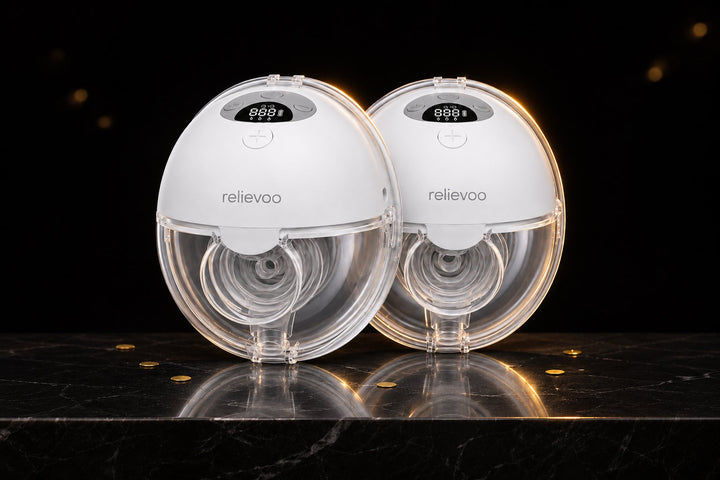
| Type | Wearable, in-bra, hands-free double electric breast pump (sold as a set of two cups) |
| Modes | 4 — Stimulation, Suction, Massage, Automatic |
| Levels | Up to 12 adjustable levels with intelligent suction & frequency adjustment |
| Controls | On-device LED display + touch buttons, no app, no Bluetooth |
| Materials | BPA-free, food-grade PP and soft medical silicone in the milk path |
Choose a pump that fits your workday
Once you know what your workplace can offer, you can think about the practical side of expressing. The right pump for you depends on where you will be expressing and how much time you have. If you will have a dedicated room and can sit for a short session, a traditional electric pump may suit you well. If your days are busy and you would rather express while answering emails or joining a video call, a hands-free wearable pump is worth considering.
The Relievoo Serenity™ wearable breast pump is designed for exactly this kind of flexibility. It sits discreetly inside your bra, so there are no tubes and no cords to the wall. With four modes including a gentle massage setting and twelve levels, you can shape each session to feel comfortable. It is also very quiet, so you can wear it on a work call without anyone around you knowing. You can browse the full range of breast pumps to compare your options.
Practise expressing before you return
There is no need to build a huge freezer stash, but a small buffer of expressed milk can make the first week back much calmer. Start practising a few weeks before your return date, so both you and your pump become familiar with each other.
A simple practice plan
- Choose a time of day when your breasts are at their fullest, usually first thing in the morning.
- Express for a short session, even just a few minutes, after or between feeds.
- Store the milk in small amounts so you can thaw only what you need.
- Label each container with the date, and use the oldest milk first.
- Practise using your pump at the same time of day you will be expressing at work, so your body gets used to the rhythm.
For detailed guidance on expressing and storing breast milk, the Australian Breastfeeding Association has clear, practical resources. The Raising Children Network also offers helpful advice on feeding and expressing.
Build a small freezer stash
A modest stash of expressed milk is a comfort blanket for the first few days back at work. It means your partner, a grandparent or the childcare centre can feed your baby while you are away, and you do not have to stress about expressing enough on day one.
How to store expressed milk
Storage times and temperatures are important, and the advice can change, so it is best to follow the current guidelines from a trusted source. The Australian Breastfeeding Association and healthdirect both publish clear, up-to-date information on storing breast milk safely. As a general rule, label everything with the date and use the oldest milk first.
You can also read our detailed guide on storing breast milk guidelines in Australia for a step-by-step walkthrough.
Plan your expressing schedule at work
Once you are back at work, a simple routine will help your body settle into the new rhythm. Most mums find that expressing around the same times their baby would normally feed works well.
A sample workday rhythm
| Time | What to do |
|---|---|
| Before work | Feed your baby or express before you leave the house |
| Mid-morning | Express during your morning break |
| Lunchtime | Express during your lunch break |
| Mid-afternoon | Express during your afternoon break |
| After work | Feed your baby as soon as you are home |
This is just one example. Your schedule will depend on your baby's age, how often they feed and how your body responds. The key is to be consistent, so your milk supply settles into a predictable pattern.

Common mistakes and how to avoid them
Even with a good plan, there are a few common pitfalls that catch many mums out. Knowing about them in advance can save you a lot of stress.
Waiting too long to start practising
Do not leave expressing until the night before you return to work. Give yourself a couple of weeks to get comfortable with your pump and to figure out what works for your body.
Forgetting to pack your pump bag
There is nothing worse than arriving at work and realising you left a flange or a bottle at home. Pack your pump bag the night before, and keep a spare set of parts at work if you can.
Using only one pump style
Some mums find a traditional pump works well at home but is awkward at work. A wearable pump like the Relievoo Serenity™ can be a helpful addition to your routine, giving you the freedom to express wherever you are. If you are still deciding, our guide on whether wearable breast pumps are worth it may help.
Not asking for help
Returning to work is a big adjustment, and it is okay to ask for support. Talk to your partner about sharing the load, and do not be afraid to ask your employer for adjustments if something is not working.
Look after yourself
Returning to work while breastfeeding is a juggling act, and it is easy to put yourself last. Try to keep your own needs in view. Drink plenty of water, eat well and rest when you can. If expressing at work starts to feel painful or your supply drops, reach out for support rather than pushing through.
Your midwife, your child and family health nurse, your GP and the Australian Breastfeeding Association helpline are all there to help. There is no single right way to do this, and every mum and baby find their own rhythm.
Final thoughts
Returning to work while breastfeeding is a significant milestone, and with a little planning it can be a smooth one. Start with a conversation with your employer, choose a pump that fits your day, practise expressing before you return and build a small stash. Most of all, be kind to yourself as you settle into the new routine. You are doing a wonderful job, and it is okay to take it one day at a time.
Frequently asked questions
What is the Australian Breastfeeding Association?
The Australian Breastfeeding Association (ABA) is a national organisation that provides education, support and resources for breastfeeding families. They offer a helpline staffed by trained counsellors, local support groups and a wide range of practical information. It is a great first port of call for any breastfeeding question, including returning to work.
How do I prepare to breastfeed when returning to work?
Start by talking to your employer about a private space to express and break times. Practise expressing once a day a few weeks before you return so your body and your pump become familiar. Building a small freezer stash of expressed milk gives you a buffer for the first few days back.
How long should a breast pump session be?
The length of a pumping session varies from mum to mum and depends on your pump and your milk flow. A general guide is to express for about the same length of time as a typical feed, but it is best to follow your own body and the current advice from the Australian Breastfeeding Association. Stop when your breasts feel comfortable and well drained.
Should breast pumping hurt?
No, pumping should not hurt. If you feel pain, check that the flange (the cup that goes over your breast) fits well and that you are using a comfortable suction level. Starting in a stimulation mode can help trigger your let-down before you switch to a stronger suction. If pain continues, talk to your midwife, child and family health nurse or the Australian Breastfeeding Association helpline.
Which breast pump should I get for work?
The best pump for work depends on your routine. A hands-free wearable pump, like the Relievoo Serenity™, fits inside your bra and lets you express while you work at your desk or attend a meeting. A traditional electric pump may suit you better if you prefer to express in a dedicated room. Think about how much time you have and where you will be expressing.