Good Breast Pump: How to Choose the Right One
Short answer A good breast pump is one that fits your body, your lifestyle and your comfort. The right choice depends on how often you plan to express, where you will pump, and what feels gentle on your breasts. Compare wearable, traditional electric and manual pumps by comfort, noise, suction control, portability and ease of cleaning.
Choosing a good breast pump in Australia can feel like a big decision, especially with so many options on the market. This guide is designed to help you compare the main types of pumps, understand what matters most, and make a calm, informed choice for your own situation. We look at wearable in-bra pumps, traditional electric pumps with tubing, and manual pumps, and we name some well-known brands so you can see where they fit.

What makes a breast pump good?
A good breast pump is not necessarily the most expensive one or the one with the most features. It is the pump that fits your body, your lifestyle and your comfort. For one mum, that might be a discreet wearable pump she can wear on a work call. For another, it might be a traditional electric pump she uses at the kitchen table each morning.
There are a few qualities that most good breast pumps share. They are comfortable against your skin, they offer adjustable suction so you can find a gentle rhythm, and they are quiet enough not to disturb a sleeping baby or a shared workspace. They are also easy to clean, with few parts and simple assembly. If a pump feels painful, awkward or complicated, it is probably not the right one for you.
Expressing is a personal choice, and there is no right or wrong reason to do it. If you are unsure whether pumping is necessary for you, the Australian Breastfeeding Association and Raising Children Network have practical information on expressing and storing breast milk. They are good places to start if you have questions about how pumping fits into your breastfeeding journey.
| Feature | Details |
|---|---|
| Type | Wearable, in-bra, hands-free double electric breast pump (sold as a set of two cups) |
| Modes | 4 — Stimulation, Suction, Massage, Automatic |
| Levels | Up to 12 adjustable levels with intelligent suction & frequency adjustment |
| Controls | On-device LED display + touch buttons (mode, +, −, power), no app, no Bluetooth |
| Materials | BPA-free, food-grade PP and soft medical silicone in the milk path |
The main types of breast pumps
There are three main types of breast pumps available in Australia. Each has a different design and suits a different lifestyle.
Wearable in-bra pumps
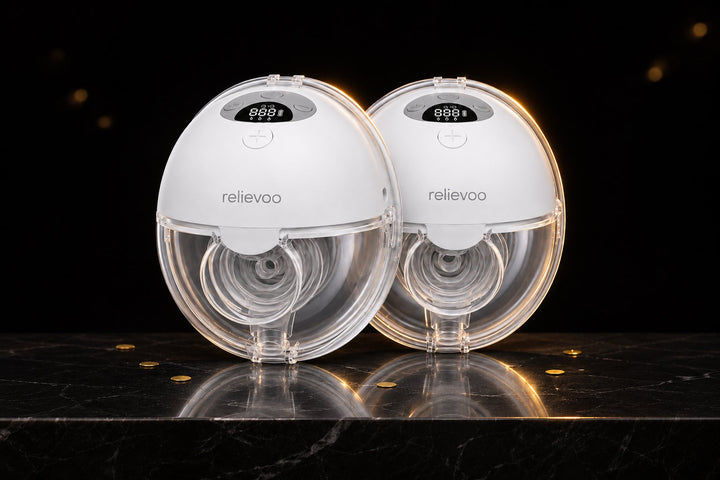
Wearable pumps, sometimes called hands-free pumps, sit discreetly inside your nursing bra. There are no tubes and no wires to the wall, so you can move around, do light tasks, or simply relax while expressing. Brands like Elvie and Momcozy make wearable pumps, and Relievoo also offers a range of breast pumps in this style.
These pumps are popular with mums who want discretion and freedom of movement. They are generally quiet, which makes them practical for expressing at work, in the car (when parked, of course), or beside a sleeping baby at night.
Traditional electric pumps with tubing
Traditional electric pumps have been around for a long time. They consist of a motor unit that sits on a table, connected to breast shields by tubing. Brands like Medela and Spectra are well known for this type of pump. They are often used by mums who express regularly at home and want a reliable, straightforward option.
These pumps can be very effective, but they do tether you to a power source and a flat surface. If you are happy to sit at a table while expressing, a traditional pump can be a solid choice.
Manual pumps
Manual pumps are simple, hand-operated devices that work without electricity. Brands like Philips Avent, Tommee Tippee and Lansinoh make manual pumps. They are lightweight, quiet and easy to pack, which makes them handy for occasional expressing or as a backup option.
The trade-off is that they require effort from your hand, and they are not ideal for frequent or full-time expressing. For mums who only need to express now and then, a manual pump can be more than enough.
What to consider when choosing a breast pump
Before you decide, it helps to think about a few key factors. These are the things that tend to matter most to mums, and they apply to every type of pump.
Comfort and fit
Comfort is the most important thing. A pump should not hurt, and the flange (the part that fits over your breast) needs to be the right size. Many pumps come with multiple flange sizes or inserts to help you find a good fit. If you have elastic nipples, you may need a gentler suction level and a flange that is sized carefully. The flange size guide from Relievoo explains how to check your sizing.
If you feel pain while expressing, it is worth checking your flange size and suction level. The Australian Breastfeeding Association has guidance on comfortable expressing, and your child and family health nurse can help too.
Noise level
How loud a pump is can matter more than you might expect. If you want to express at work, in a shared space, or beside your baby at night, a quiet pump makes a big difference. Wearable pumps are generally designed to be discreet, and many traditional pumps are reasonably quiet as well.
Suction control
Every mum is different, and so is every expressing session. A pump with multiple modes and adjustable suction levels lets you find a rhythm that feels right. Most electric pumps offer a stimulation mode to encourage let-down, followed by a suction mode for expression. Some also include a massage mode for comfort.
Portability
Think about where you will express. If you are mostly at home, portability may not be a priority. If you plan to express at work or while travelling, a lightweight, wearable pump is far easier to manage. A pump that fits in your bag and does not need a power point gives you more freedom.
Cleaning and maintenance
Anything that touches your milk needs to be cleaned after every use. Pumps with fewer parts are quicker to wash and dry. Look for pumps made from BPA-free, food-grade materials, and check that the parts are easy to take apart and put back together. For sterilising and storage times, follow the current advice from the Australian Breastfeeding Association or healthdirect.
Comparison table: types of breast pumps
To help you compare at a glance, here is a summary of the main pump types. The Relievoo column refers to the M22 PRO2 Serenity, a wearable in-bra double pump.
| Feature | Wearable in-bra (Relievoo M22 PRO2) | Wearable in-bra (other brands) | Traditional electric with tubing | Manual |
|---|---|---|---|---|
| Hands-free use | Yes, worn inside the bra | Yes, worn inside the bra | No, tethered to a motor unit | No, requires one hand |
| Discretion | High, discreet under clothing | High, discreet under clothing | Low, visible tubing and motor | Moderate, compact but visible |
| Modes and levels | 4 modes, up to 12 levels | Varies by brand and model | Varies, often multiple modes | No electric modes |
| Noise | Ultra-quiet motor | Generally quiet | Varies, can be noticeable | Silent |
| Portability | Excellent, no wires or tubes | Excellent, no wires or tubes | Limited, needs a flat surface | Very portable, lightweight |
| Best for | Mums who want freedom and comfort | Mums who want freedom and comfort | Mums who express regularly at home | Occasional expressing or backup |
A closer look at the Relievoo M22 PRO2 Serenity
Relievoo's M22 PRO2 Serenity is a wearable, in-bra double pump designed around comfort. It has four modes: Stimulation to encourage let-down, Suction for expression, Massage to ease engorgement and tenderness, and Automatic, which moves between stimulation and suction for you. There are up to 12 adjustable levels, so you can find a gentle setting that feels right.
The pump is controlled with one-touch buttons on each cup, and a small LED display shows your mode, level and battery. There is no app and no Bluetooth to pair, which keeps things simple. The milk path is made from BPA-free, food-grade PP and soft medical silicone, and the clear collector cups let you see your milk as it flows.
The motor is ultra-quiet, which makes it practical for expressing beside a sleeping baby at night or on a work call. It is USB-rechargeable with a round charging base, and it sits upright in your bra for a tidy, spill-resistant fit.

Practical questions about breast pumps
Here are answers to some of the questions mums often ask when comparing breast pumps.
Why does breast pumping feel good?
Many mums find expressing comfortable and even relaxing once the suction is at the right level. A pump with a gentle, adjustable rhythm can feel soothing, especially with a massage mode to ease engorgement or tenderness. If pumping hurts, it is worth checking your flange size and suction level, as pain is a sign that something needs adjusting.
How does a breast pump work?
Electric breast pumps use suction to draw milk from your breast, mimicking the rhythm of a baby suckling. Most have a stimulation mode to encourage let-down, followed by a suction mode for expression. Wearable pumps sit inside your bra and are hands-free, while traditional pumps use tubing to connect the breast shields to a motor unit.
How long should a breast pump session be?
There is no single answer that suits everyone. A session typically lasts until the flow slows and your breasts feel softer. Follow the current advice from the Australian Breastfeeding Association or your child and family health nurse, and let your body guide you.
What should I do if my pump is not working well?
If a pump feels weak, painful or inconsistent, check the flange fit first, as a poor seal can reduce suction. Make sure all parts are assembled correctly and that the milk path is clean. If you are using a wearable pump, check that the cup is sitting upright in your bra. If problems continue, talk to your midwife, child and family health nurse, or the Australian Breastfeeding Association helpline.
Verdict: who each pump suits
There is no single best breast pump for everyone. The right choice depends on how you live, where you plan to express, and what matters most to you. Here is a clear summary of who each option suits.
- Choose a wearable in-bra pump if you want hands-free convenience, discretion, and the freedom to move around while expressing. This is a strong option for mums returning to work, travelling, or caring for other children. The Relievoo M22 PRO2 Serenity is designed for comfort, with a massage mode and ultra-quiet motor.
- Choose a traditional electric pump with tubing if you mostly express at home and prefer a proven, straightforward design. This type of pump has been used by mums for decades and is a reliable choice for regular sessions at a table.
- Choose a manual pump if you only need to express occasionally, want a lightweight backup option, or are travelling light. Manual pumps are simple, quiet and easy to pack, but they require more effort.
If you are still unsure, it can help to think about your typical day. Do you want to express while your baby sleeps, or while you move around the house? Do you need to express at work? Answering these questions will point you toward the right type.
Final thoughts
Choosing a breast pump is a personal decision, and there is no wrong answer. The best pump is the one that fits your life, your comfort and your goals. Take your time, compare the options, and remember that you can always adjust your choice as your needs change.
If you would like to explore wearable options, you can look at the Relievoo M22 PRO2 Serenity or browse the full Relievoo breast pump collection. For general breastfeeding information, the Australian Breastfeeding Association, Raising Children Network, healthdirect and Pregnancy, Birth and Baby are trusted places to learn more.
Relievoo offers free Australia-wide tracked shipping, a 30-day money-back return, and a lifetime warranty on all pumps. If you have questions about a product, Relievoo customer service is happy to help.
Frequently asked questions
What makes a good breast pump?
A good breast pump is comfortable, quiet, easy to clean and suits the way you live. It should have adjustable suction so you can find a gentle level, and it should fit your breast properly. Think about where you will express and how often, as that will guide which type is right for you.
Which breast pump is best?
There is no single best breast pump for everyone. Wearable in-bra pumps suit mums who want hands-free convenience and discretion. Traditional electric pumps with tubing are a reliable choice for regular sessions at home. Manual pumps work well for occasional expressing or as a backup.
Why does breast pumping feel good?
Many mums find expressing comfortable and even relaxing once the suction is at the right level. A pump with a gentle, adjustable rhythm can feel soothing, especially with a massage mode to ease engorgement or tenderness. If pumping hurts, check your flange size and suction level.
How does a breast pump work?
A breast pump uses gentle suction to draw milk from your breast, mimicking the rhythm of a baby suckling. Most electric pumps have a stimulation mode to encourage let-down, followed by a suction mode for expression. Wearable pumps sit inside your bra and are hands-free.
How long should a breast pump session be?
There is no single answer that suits everyone. A session typically lasts until the flow slows and your breasts feel softer. Follow the current advice from the Australian Breastfeeding Association or your child and family health nurse, and let your body guide you.